Showing posts with label wellness. Show all posts

Monday, September 30, 2013

Growing Microgreens and Wheatgrass

     Microgreens are very easy to grow indoors. I have some shelves on a wall that I place mine on. Usually within a week they are ready to eat. Some take a bit longer than others but generally they grow quickly and need minimal light. Wheatgrass is the same way. It doesn't need to be near a window and grows very quickly.

     Here is the process: First you soak the larger seeds. I soak my buckwheat, sunflower, wheatgrass, and barley grass seeds. This softens the hull of the seed so it can sprout easier once on the soil. You don't have to do this but I have found that it takes longer to grow if you don't. For the smaller seeds such as Pak Choi, Radish, Arugula, and Mustard I don't bother soaking. The seeds are small and are sprouted within a day. Additionally, making the smaller seeds wet would also make it much for difficult to spread them evenly on the tray.


The seeds closest to the front are the buckwheat seeds. Some of them float and some of them sink. This doesn't matter. They are all okay to use in the trays.

These are the sunflower seeds up close as they soak.

These are the wheatgrass seeds as they soak.

After they have soaked for a day I go ahead and plant them. The directions I got when I first ordered the kit said to soak for 8-12 hours. Then it said to drain the water and let them sit for another 8-12 hours with a wet paper towel over them. Finally, it instructed you to plant them.

I have started letting them soak for 12-24 hours and then planting them. This has worked out fine for me so far.

I take a tray and add about 5 cups of dirt and spread it evenly throughout the tray. I have started getting the trays with and without drainage holes. I put the dirt in the one with the drainage holes and then place that one into the tray without holes. This enables me to catch the water and keeps the water from sitting in the tray too long and becoming moldy which can happen if you plant them in the tray without any holes.

I get my trays from the local Brew & Grow store and sometimes from local home improvement and garden shops.

Above you can see the dirt spread in the tray. In this particular tray I partitioned off several sections because I want to grow several kinds of greens in the same tray. In this particular one I did Pak Choi, Arugula, Mustard, and Radish. With the smaller seeds I sow about two teaspoons of seeds for a WHOLE TRAY so for the partial tray I used about half a teaspoon of seeds since these seeds are so much smaller. When I use the larger seeds such as Wheatgrass, Buckwheat, Sunflower, or Barley Grass I use almost a whole cup of seeds in a tray.


Once the seeds are placed in the dirt I water it very well to get everything nice and moist since this is what helps the seeds sprout. This is important with all of your trays but especially the ones with the smaller seeds that you did not soak. It is the adding of the moisture that helps them break through their hulls and grow. If you don't keep them moist the growth process will be stopped or at the very least delayed.


After two days this is what the Wheatgrass looks like (above) and the Sunflower greens (below)
Two days later (four days in the tray) here is what the Wheatgrass and Sunflower greens look like, respectively:
After six days the Wheatgrass can start to be cut and used (7 days total if you include the day to soak it)
Below you can see the Sunflower greens after 6 days. The hulls remain atop the greens so you pick them off when you use them. It doesn't hurt if you eat a couple. These could start to be cultivated and eaten. I will probably wait another day.
The microgreens have traditionally been used as garnishes in restaurants but are finally being recognized for the amazing nutritional value. I put them in my salads. I have used all microgreens to make my salads. They pack an amazing nutritional punch, are beautiful to grow, and taste amazing, not to mention they grow very quickly.

So now that you know how to grow them. Let's talk more about why you should grow them.

Microgreens pack more nutrients than mature leaves from the same plant. They usually have 4-6 times more nutrients but exact numbers vary due to where it is grown, when it is harvested, and the soil medium used. It usually takes 7 days of sunlight and soil before they are ready to be harvest but again this varies depending on the seed type, where it is grown, when it is harvest and the soil medium used.
In addition to the ones I mentioned growing above, such as Pak Choi, Arugula, Mustard, Radish, Sunflower, and Buckwheat some other common ones are Daikon Radish, Cilantro, and Basil. There are many additional kinds as well.
Microgreens are harvested during the cotyledon stage of development. This is when the first true leaves sprout. It is after the germination and sprouting stage but before the plant fully develops its root and leaf structures.
What is the difference between a sprout and a microgreen? When you consume sprouts you are consuming the root in addition to the little plant that is starting to grow. With microgreens you are not eating the root, you are only eating the stem and leaves.

Wheatgrass increases your red blood cell count. It lowers blood pressure. It cleanses blood, organs, and the gastrointestinal tract of debris. It stimulates our metabolism and our body's enzyme systems by enriching our blood. It aids in reducing blood pressure by dilating blood pathways throughout the body. Wheatgrass stimulates the thyroid gland, corrects obesity, indigestion, and a host of other complaints. It alkalizes the body which helps in treating a host of gastrointestinal issues. It is a powerful detoxifier and liver and blood protector. Enzymes and amino acids found in wheatgrass protect us from carcinogens like no other food or medicine. It strengthens our cells, detoxifes the liver, and bloodstream, and chemically neutralizes environmental pollutants. Wheatgrass fights tumors and neutralizes toxins. It generally cleanses the blood and neutralizes and digests toxins in our cells. It contains beneficial enzymes that help your body work - whether it is healing a cut or losing weight. Last but not least, it is remarkably similar to our blood. It slows aging, heals our skin, provides oral care, restores fertility, and promotes youthfulness.

Above is a picture of the composition of chlorophyll and our blood. The similarity in structure between the two is what has earned wheatgrass the name of "Green Blood". Additionally, our bodies thrive in an alkaline state. The hydrogen content is what determines alkalinity and its content in our blood is 7.4. Wheatgrass has the same hydrogen content/alkalinity of 7.4
I can't say enough about this amazing food. I can however encourage you to start out by drinking one ounce and then increasing weekly from there. You should start out small because it's such a powerful detoxifier that it can give you an upset stomach if you are not careful. I also encourage you to wait two hours after eating before you drink it. I also encourage you to wait to eat for at least thirty minutes once you drink it.

Recommendations for choosing seeds and soil:

Make sure your seeds are organic, have a high germination rate, and are microbially tested.

If you want suggestions of brands or companies to use you can email me. I don't want anyone to think I am being paid to advertise a certain brand. I write my blogs because I love natural health and nutrition. I also love showing others how to do these things for themselves and enjoy seeing people thrive and live to their highest potential.

For the soil, I use mushroom compost which is very cheap, doesn't have chemicals, and can be purchased from your local hardware and/or home improvement store. Be careful to not buy your run of the mill potting soil especially if it has fertilizers and stuff in there otherwise you will be ingesting those chemicals.

Please feel free to email me with any questions or to book a workshop where I can demonstrate and show you in person how to grow these amazing living foods.

reneeraville@simplelifesimplehealth.com


Sunday, September 22, 2013

Canning with Aunt D - Day One

     I arrived in Flint, Michigan on the evening of Wednesday August 28th. I went to bed early after talking for a while with my Aunt D and Uncle John. We had a lot of work ahead of us the next day. We were on a mission to can some vegetables and various goods. I woke up Thursday morning and my aunt showed me her garden and some of the changes she has made. This garden has grown, evolved, matured, and changed over the last few years. Every year my aunt has expanded it and changed it. This last year she has done some major renovation that any fellow gardener would admire and appreciate. She has added beds, built a fence to keep the deer out, and is in the process on making part of her garden a greenhouse. This year she says she is experimenting with seed placement and plant relationships since some plants grow better together than others. She also had Uncle John make her a "garden ruler" to help her space her seeds better.

Her sunflowers tower above me.
She shows me her squash plants which she has already picked and pruned.  

She also shows me her rain barrel and her composter.


This is where she is going to build a green house. 


These are her tomato plants


 Additionally she had peas that grew around a trellis she has on one side of her garden. She also had cucumbers and an assortment of herbs.

As I walk out of the garden I have to take one more picture of the sunflowers which still astonish me.

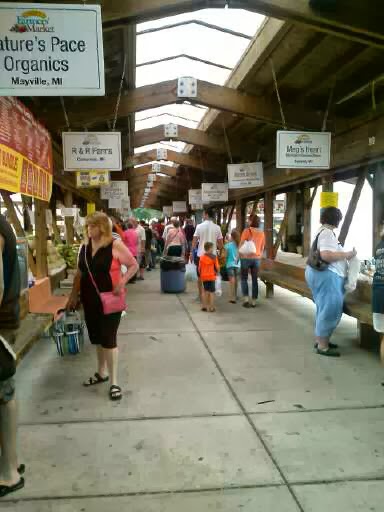
After we walk through her vegetable and herb garden we head to the Flint Farmers Market. All the vendors here are amazing but I only captured a few photos. There was so much visual stimuli to capture and take in!


After we get some of the items that we need to begin our canning we head back to the house to start the process. One of the first things we can is our peaches. We can the peaches in the pressure canner since they are not acidic. It is better to can non-acidic fruits and vegetables in a pressure canner if you have it available. In addition to canning our peaches we also start preparing our soup mix. As we cleaned the vegetables for the soup blend we are canning, we saved the ends of the vegetables to put together to make a vegetable soup base that we would also be canning.

The canner on the left stove burner is a regular traditional canner and the one on the right is the pressure canner. The pressure canner must be watched at all times and everything you can has a particular pressure that it must reach once the jars are in the canner and they also all have individual cook times that they stay in the canner for once that pressure is reached.


These are the peaches we canned once we were done processing all of them. I think the jars always look so pretty!

 
 Above is a picture of the vegetable ends we collected to make our base. Below is a picture of the soup that we processed. We cooked it down first and then put it into the jars and processed them. The vegetables included onion, garlic, celery, beans, spinach, okra, tomatoes, corn, and carrots.


 Once we collected the vegetable ends we went and picked some calendula flowers from her garden. We also added this to the soup base.


Calendula flowers boost the immune system. They prevent inflammation and infection, including viral infections. They also ease cramping and hot flashes.


Once the broth has finished cooking down and boiling for quite some time we process it. Here is what the strained and processed final product looks like. 

In addition to processing our peaches, vegetable soup mix, and vegetable soup base we spent hours cleaning apples that my aunt received free of charge from her neighbors yard. We had several bushels of apples. When we finished for the day, after more than eight hours of work, we still had bushels to go....but that was for the next day.
 

Friday, August 9, 2013

Essential Eucalyptus Oil

Many people have smelled Eucalyptus oil when they have been in the steam room at the gym. It is a known decongestant and expectorant. Try hanging a bunch of fresh Eucalyptus in your shower or putting some essential oil on the shower walls so that the steam will help disperse it as you shower and open up your chest and lungs. Eucalyptus is also an anti-inflammatory, anti-fungal, and anti-bacterial. You can add it to steamy water to help you clear your sinuses and chest when suffering from a cold or even some allergies. It is also known for purification and healing. Get some today and give it a try in your shower or even in your bath with our Eucalyptus bath salts! These can be found at my current retailers Chicago Lash Lounge in Roscoe Village and Christopher Thomas Salon in Lakeview. 


Friday, August 2, 2013

Essential Lavender Oil


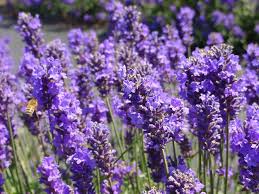
There are so many people that love Lavender and is it any wonder why? Lavender helps revitalize us if we are exhausted and stressed. It helps to calm us down. It has been other benefits as well. Lavender tea or Lavender Lemonade is loved for its floral flavor. It is also a good natural antiseptic, antibacterial, and painkiller. You can use it externally to treat cuts, wounds, insect bites and allergies. It is also a decongestant so it helps to fight colds and flus. Finally it is good on the digestive system and not only assists digestion but helps alleviate nausea and indigestion.

When using the Lavender internally you want to use fresh or dried flowers. The essential oil is usually not advised for internal use unless specifically noted on the bottle. It is also very concentrated so you always want to dilute it with what is known as a carrier oil such as grapeseed, almond, olive, or apricot oil.

There are several oil blends that contain Lavender that are my favorites: Peace and Calming blend as well as the Irritability blend...look for these blends to be produced by Simple Life. Simple Health. and on the shelves of my retailers soon. You can always contact me for some samples or products as well.

Did you know there are several kinds of Lavender? The most commonly used is the Lavender Augustifolia

Also, stay tuned for another live demo that I will post on You Tube and my blog where I showcase another smoothie or fresh juice recipe. I am also planning on showing how I make the bath salts and other body products. So stay tuned Chicago and remember that Simple Life. Simple Health. is here to serve you!


Monday, July 15, 2013

Superfood Smoothie


Watch the latest blog post/video about my new super food smoothie. I learned about this at a nutrition class I took last week.

It combines kale and blueberries with coconut water like the other smoothie recipe I showed you. However, this one has some almond butter, bee pollen, raw cocoa, and split pea protein powder (optional along with chia seeds).

I added some ice and you can add honey or agave nectar to add to the sweetness although I like it just the way it is.

Enjoy!

P.S. If you try it please post your comments, thoughts, and/or suggestions!!

Bee Pollen - Superfood


Bee pollen, sometimes referred to as nature's perfect food, is a combination of flower pollen, nectar and the digestive juices of worker bees. Human consumption of bee pollen has been praised throughout history. The Chinese emperor Shen Nung compiled an extensive medical collection which discusses the merits of beehive products as far back as 2735 B.C. Egyptian papyri refers to Bee Pollen as life giving dust and frequently outlines how to use it as a sacred offering to the gods. There are written accounts of Roman legions who carried dried cakes of Bee Pollen for sustenance. Bee Pollen is even praised in the Bible, the Talmud, the Torah, the Koran, and in the Code of Islam for its beneficial healing and nutritional properties. 

Research studies document the therapeutic efficacy and safety of bee pollen. Clinical tests show that orally ingested bee pollen particles are rapidly and easily absorbed - they pass directly from the stomach into the blood stream. Within two hours after ingestion, bee pollen is found in the blood, in cerebral spinal fluids and in the urine. By providing the human body with all the nutritional elements it needs, and in just the right proportions, honey bee pollen allows the body's own healing and rejuvenation mechanisms to perform their normal functions of building, restoring, maintaining and protecting every cell.

According to a bee expert Royden Brown, bee pollen contains differing quantities of a natural antibiotic which fights E. Coli and Proteus organisms which can cause serious diseases. Salmonella and other strains of colibacillus were found to be effected by the natural antibiotic action in bee pollen as well. This may well explain why the health benefits of bee pollen have long included boosting of the immune system.

Scientists recently found that bee pollen showed a strong anti-estrogenic effect. Furthermore, it caused no estrogenic activity or chromosome damage in cells whatsoever. Research also found that bee pollen showed a significant ability to protect cells from the genotoxic effects of three common anti-cancer drugs - mytomicin C, Bleommycin, and Vincristine. What that means is that these cancer drugs cause damage to our DNA when we take them. Not only do they damage and kill cancer cells, but they also damage our healthy cells. Reducing this damage is very valuable and can potentially lead to a healthier and more vibrant life after cancer treatment. The details of this study can be found in the European Journal of Medicinal Chemistry, 2010 June 9.

With the addition of roughage and water, the human body can survive on honey bee pollen alone. This is because it is the only food which contains over 96 nutrients including all known vitamins from A to K, 28 minerals, 14 fatty acids, and all 8 essential amino acids, several hormone-like compounds and all 22 known essential nutritional elements, which humans require to achieve and maintain optimum vitality. Bee pollen contains 40% protein in a highly bio-available form of free amino acids which get directly assimilated by the body. Best of all, everything that can be derived from bee pollen is broken down as it is going to be, meaning that the body doesn't need to break the nutrients down any further.

Bee pollen can help the body build a resistance to allergies by lowering the body's sensitivity to pollen. This is similar to the way vaccinations prevent disease. By consuming it in small quantities it can help the body gradually build up a resistance.

Enjoy your bee pollen! You can find it in local health food stores. 

Cocoa - Nature's Antidepressant?


One of nature's most sought after foods can benefit the body in a number of ways. Cacao, cocoa, chocolate - no matter how you say it, humans around the globe seek out this mouth watering pleasure and mood-boosting effects of this extraordinary antioxidant.

Cocoa beans are the seed of the fruit tree. Theobroma cacao grows in the shades of the rainforest just slightly north and south of the equator. All chocolate is made from cacao, the edible part of the cocoa bean after it has been harvested, dried, fermented, and hulled. These beans have some of the most valuable nutrients available to us. This bean has been considered a highly beneficial medicine because it contains over 300 identifiable chemical compounds. Many of these compounds are destroyed by cooking, processing and refining. Dairy products block the absorption of antioxidants in chocolate. Yet most commercially produced candy and chocolate bars contain low levels of cacao bean compared to other ingredients such as sugars, milk, fat, hydrogenated oils, and artificial flavorings.

In comparison by weight, cacao has more antioxidant  flavonoids than blueberries, red wine, or black and green teas. In fact, it has up to four times the quantity of antioxidants found in green tea. The Aztecs called the cacao "heart blood" because they understood the truly beneficial aspects on the cardiovascular system.

That wonderful feeling you get when you consume your favorite raw cacao treat is not in your minds! By increasing the levels of specific neurotransmitters in our brains, cacao helps promote a positive outlook, facilitates rejuvenation, and lifts our spirits. It raises Serotonin, acting as a natural anti-depressant. It increases endorphins which are our natural pain and stress chemicals known as neurotransmitters, thus helping us experience pleasurable feelings. It elevates Phenylethylamine (PEAs) which is the natural chemical compound secreted when we are in love. It elevates mood and acts as an anti-depressant thus helping us to increase focus and awareness. It elevates Anandamide's known as "bliss chemicals" because they are released in the brain when we are feeling happy.

The key is eating minimally processed raw cacao in small amounts to receive these health boosting qualities. Like anything else, we can over do it.